

When You Want a Natural Birth—But You're Afraid to Hope for It

If you're being honest…
There’s a part of you that really wants a natural birth.
You imagine being present.
Working with your body.
Feeling supported.
Meeting your baby and thinking:
I did that.
But almost as soon as you let yourself imagine it, another thought shows up:
What if I can’t do it?
What if something goes wrong?
What if I tell everyone what I want…and then my birth looks completely different?
So you protect yourself.
You say:
“Whatever happens, happens.”
And sometimes that really is flexibility.
But sometimes?
It’s fear wearing a very reasonable outfit.
Because if you don’t hope too much…
maybe you won’t be disappointed.
If that’s where you are, this is for you.
Why It Can Feel Scary to Want a Natural Birth
Birth is one of those experiences where people are often warned not to get “too attached” to what they want.
You may hear:
“Don’t make a birth plan. Birth never goes according to plan anyway.”
Or:
“Just get the epidural.”
Or:
“The only thing that matters is a healthy baby.”
And yes—your baby’s safety matters deeply.
So does yours.
But wanting safety does not mean you have to stop caring about how you experience birth.
You are allowed to care about:
feeling informed
being supported
being treated with respect
staying involved in decisions
using fewer interventions when appropriate
trying for an unmedicated birth
feeling connected to your partner
understanding what is happening
Those things matter too.
Wanting them doesn’t make you naive.
It makes you intentional.
The Real Fear Isn’t Always Labor
Sometimes the fear underneath all of this isn’t:
“I’m afraid of contractions.”
It’s:
“I’m afraid of trying—and feeling like I failed.”
That changes the conversation.
Because now you’re not only preparing for birth.

You’re protecting yourself from disappointment before birth has even started.
So you keep your hopes small.
You avoid saying what you really want.
You tell yourself not to get too invested.
But here’s the problem:
Not having preferences doesn’t give you control either.
It just means you may walk into birth without ever asking:
What actually matters to me?
That’s worth asking.
Wanting a Natural Birth Doesn’t Mean Demanding a Perfect Birth
This is where we need more nuance in birth conversations.
Wanting a natural birth does not mean:
you believe complications never happen
you think intervention is always bad
you believe pain medication is failure
you expect birth to follow a perfect script
you plan to ignore medical advice
It can simply mean:
“If my pregnancy and labor remain healthy, I would like to work with my body, use supportive coping tools, and avoid interventions I don’t need.”
That is a preference.
Not a promise.
And there is a big difference.
You Can Hold Hope and Flexibility at the Same Time
You do not have to choose between:
“I want a natural birth.”
and
“I’ll adapt if circumstances change.”
Both can be true.
You can prepare deeply for the birth you hope for…
and still ask new questions if the situation changes.
You can plan for an unmedicated birth…
and still decide later that pain medication is right for you.
You can hope to avoid a C-section…
and still feel proud of how you navigated one if it becomes necessary.
That is not failure.
That is flexibility with preparation underneath it.
And I think that’s a much healthier goal than pretending you don’t care what happens.
The Missing Piece Isn’t More Hope
Here’s what most people aren’t told:
Confidence doesn’t come from hoping really hard.
It comes from preparation.
Not because preparation lets you control every outcome.
It doesn’t.
But preparation gives you something to do with the uncertainty.
Imagine early labor begins.
You think:
Is this really it?
The contractions aren’t strong yet.
You’re not at the hospital.
There’s no nurse standing beside you.
It’s just you and your partner.
Now the questions become:
Do we understand what may be happening?
Do we know what to do right now?
Does my partner know how to help?
Do we know when to call our provider?
Can we stay grounded if this changes?
That’s where preparation matters.
Not because you predicted every possibility.
Because you built skills before you needed them.
What Actually Changes When You Prepare
Prepared couples do not suddenly become certain about everything.
Birth is still birth.
Things can still surprise you.
But preparation changes your starting point.
Instead of:
“I hope I can handle this.”
you may begin thinking:
“We practiced what to do when this gets intense.”
Instead of:
“I hope my partner knows how to help.”
you know:
“We prepared together.”
Instead of:
“I hope nobody recommends something unexpected.”
you know:
“If a decision comes up, we know how to ask questions.”
Instead of:
“I hope the birth plan works.”
you know:
“The plan can change. Our preparation comes with us.”
That is a much sturdier kind of confidence.
And What If Birth Doesn’t Go the Way You Hoped?
This is the part I really want you to hear.
Preparing for a natural birth is not wasted if your birth changes.
The skills still matter.
Your partner’s preparation still matters.
Knowing how to ask questions still matters.
Understanding labor still matters.
Feeling supported still matters.
Being involved in decisions still matters.
We’ve seen this with the couples we teach.
Sometimes the birth they hoped for is the birth they have.
Sometimes it isn’t.
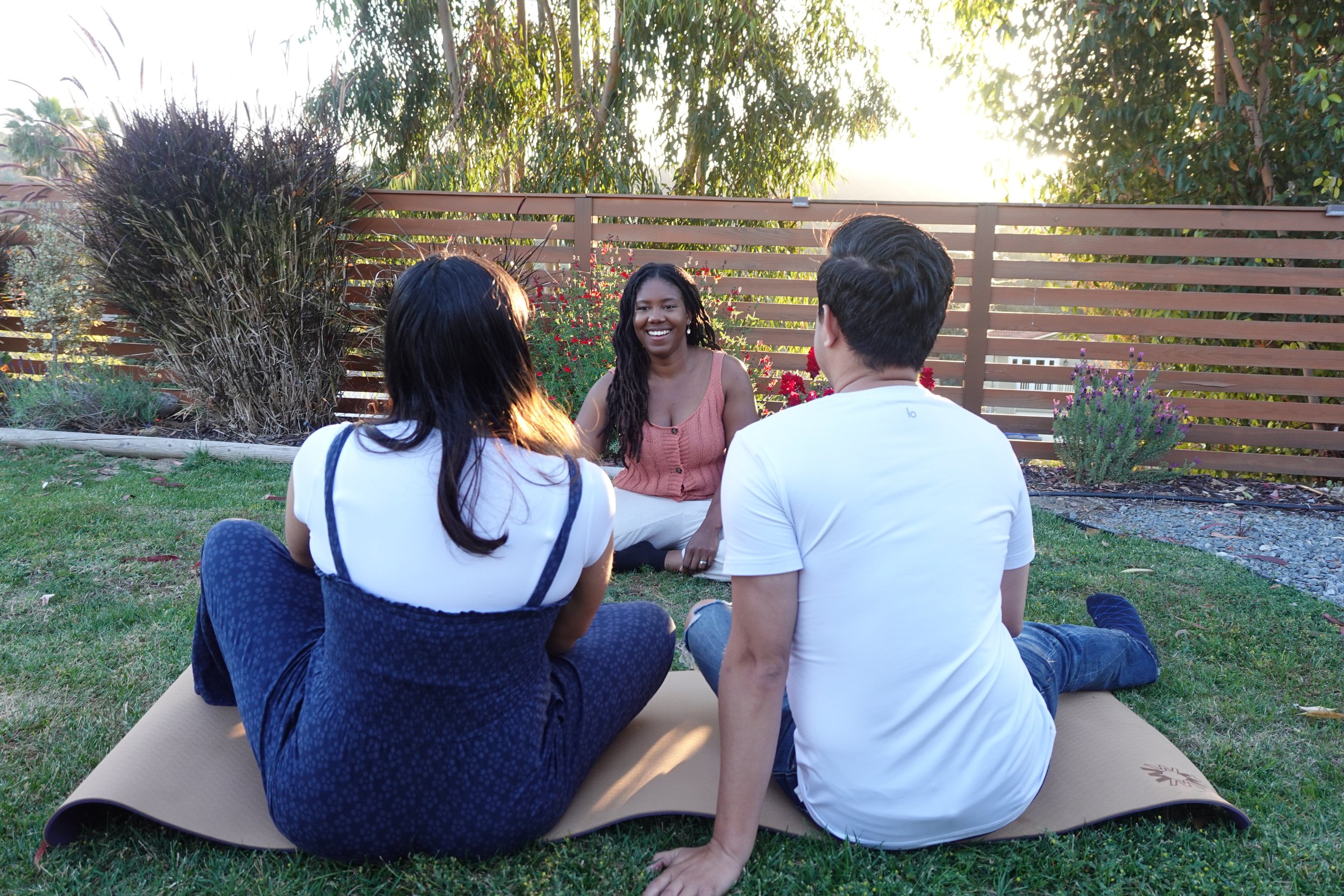
But the couples who prepared deeply often describe something bigger than simply whether every preference happened:
They understood what was happening.
They felt supported.
They participated in their care.
They adapted as a team.
That matters long after the birth itself is over.
Your Birth Goal Is Not a Test
This may be one of the most important mindset shifts in this entire article.
Natural birth is not a test of whether you prepared well enough.
It is not proof that your body is better.
And changing the plan does not erase the work you did.
Preparation is there to support you through the birth that actually unfolds.
Sometimes that means helping you continue toward the unmedicated birth you hoped for.
Sometimes it means helping you recognize:
Something has changed. We need a different plan now.
Both require confidence.
Both require support.
Both deserve preparation.
It’s Okay to Want What You Want
You are allowed to say:
“I want to try for a natural birth.”
Without adding ten disclaimers.
You are also allowed to say:
“And if circumstances change, I want to understand my options and make the best decision we can.”
Those two statements belong together.
That is not being rigid.
It is not being unrealistic.
It is being intentional.
Because birth preparation isn’t about controlling birth.
It’s about preparing yourself to participate in it.
You Don’t Need to Leave Your Birth Up to Chance
This is where I want to gently challenge the phrase:
“Whatever happens, happens.”
Some things in birth will absolutely be outside your control.
But that does not mean everything is outside your influence.
You can choose to learn.
You can practice coping skills.
You can choose a supportive care team.
You can prepare your partner.
You can learn how to ask questions.
You can understand your preferences.
You can prepare for alternatives.
You can decide how you want to show up.
That’s very different from trying to control every outcome.
It’s preparation.
Before Labor Starts, There Are 3 Things I Want You to Know
If part of you wants a calm, confident, supported birth—but another part is afraid to hope too much—you do not need another promise that everything will go perfectly.
You need preparation that still works when things don’t.
That’s why Stephen and I created our free class:
The 3 Things Every First-Time Parent Should Know Before Labor Starts
Inside, you'll learn why information alone isn't enough, how prepared couples approach labor even when things change, and how your partner can become one of your greatest sources of support.
Because you don’t have to choose between hope and flexibility.
You can prepare for the birth you want…
and build the confidence to navigate the birth you get.
You are allowed to hope.
You are allowed to prepare.
And you are allowed to change course when new information calls for it.
Continue Preparing for Your Birth
If this post resonated with you, you may also enjoy:
• Why a Hospital Tour Isn’t Enough to Prepare You for Birth
• Do Birth Plans Actually Matter? (And What Most People Get Wrong)
• How to Prepare for a Natural Birth (Without Fear or Guessing)
