

For many first-time parents, taking a hospital tour feels like checking off one of the biggest items on their birth preparation list.
You see the labor rooms.
You learn where to park and where to check in.
You find out what to bring and what the hospital provides.
And afterward, you might think:
“Okay. At least we know what to expect now.”
And that's a good feeling.
But there's one important distinction I want you to understand:
A hospital tour shows you where birth happens. It doesn't necessarily teach you how to navigate what happens during birth.
And those are two very different kinds of preparation.
What a Hospital Tour Actually Prepares You For
Hospital tours are useful. I encourage expecting parents to learn about the environment where they're planning to give birth.

Depending on the hospital, a tour may help you understand:
Where to go when labor begins
What the labor and delivery rooms look like
What comfort tools or equipment are available
What to bring with you
Visitor policies and hospital routines
Knowing these things can make the hospital feel less unfamiliar.
But even after a great tour, you might still have questions like:
How will I know what to do when contractions get stronger?
What can my partner actually do to help me?
What happens if my provider recommends an intervention I wasn't expecting?
How do we make decisions when things don't go according to plan?
Those are the questions that often matter most once labor begins.
And they usually require more than a walkthrough of the maternity unit.
5 Things a Hospital Tour May Not Teach You About Labor
1. How Labor Works—and What Your Body Is Trying to Do
Knowing what a labor room looks like isn't the same as understanding what's happening inside your body during contractions.
When you understand the basic physiology of labor, you can begin to see contractions as part of a process rather than something you simply have to endure.
That doesn't mean labor will always feel easy or predictable.
It means you'll have a better understanding of what's happening and why certain coping techniques may help.
For example, movement, position changes, breathing, rest, and relaxation can all play a role in how you cope with labor.
If you'd like to explore this further, read How to Work With Contractions (Instead of Fighting Them).
2. What to Do When Labor Gets Intense
It's one thing to hear that labor can be intense.
It's another to know what you can actually do when contractions demand more of your attention.
Many parents prepare their hospital bag but spend much less time practicing how they'll cope with labor.
You don't need to master every technique.
But it helps to know a few options you can turn to, such as:
Changing positions to find greater comfort
Using breathing and relaxation techniques
Applying counterpressure or massage
Using water or other comfort measures when available
Asking for additional support or pain relief when you need it
The goal isn't to prove how much discomfort you can handle. It's to know you have options.
And those options are easier to use when you've explored them before labor begins.
3. How to Make Informed Decisions During Labor
Imagine you're in labor and your provider says:
“We recommend starting Pitocin.”
Or:
“We'd like to break your water.”
Or:
“We're concerned about how labor is progressing, and we need to discuss the next steps.”
You may have heard these terms before.
But do you know what questions to ask?
Birth preparation should help you understand common interventions, why they may be recommended, and how to participate in decisions about your care.
For non-emergency decisions, you can ask:
Why are you recommending this?
What are the potential benefits and risks?
Are there other reasonable options?
What happens if we wait or reassess?
Sometimes an intervention is important or time-sensitive. Other times, you may have space to discuss your options.
Being prepared doesn't mean refusing interventions. It means understanding what's being recommended and participating in decisions whenever possible.
That's an important part of what we teach at Our BirthRoom.
4. How Your Partner Can Actually Support You
Here's something I wish more couples understood before labor:
Your partner doesn't have to know everything about birth. But they do need to know how to support you.
And that takes more than knowing where to park.
Your partner can learn how to:
Recognize when you need encouragement or quiet
Offer hands-on comfort measures
Help you change positions
Communicate your preferences to the care team
Ask questions when you're focused on managing contractions
This is one reason Stephen and I emphasize preparing together.
When both people understand the process, the pregnant parent doesn't have to carry the entire mental load of preparing for birth.
Your partner has a role to practice, too.
And preparation gives you a chance to figure out what support feels helpful before you're in the middle of labor.
The Missing Piece: Preparing Together for the Experience
What Prepared Couples Do Differently
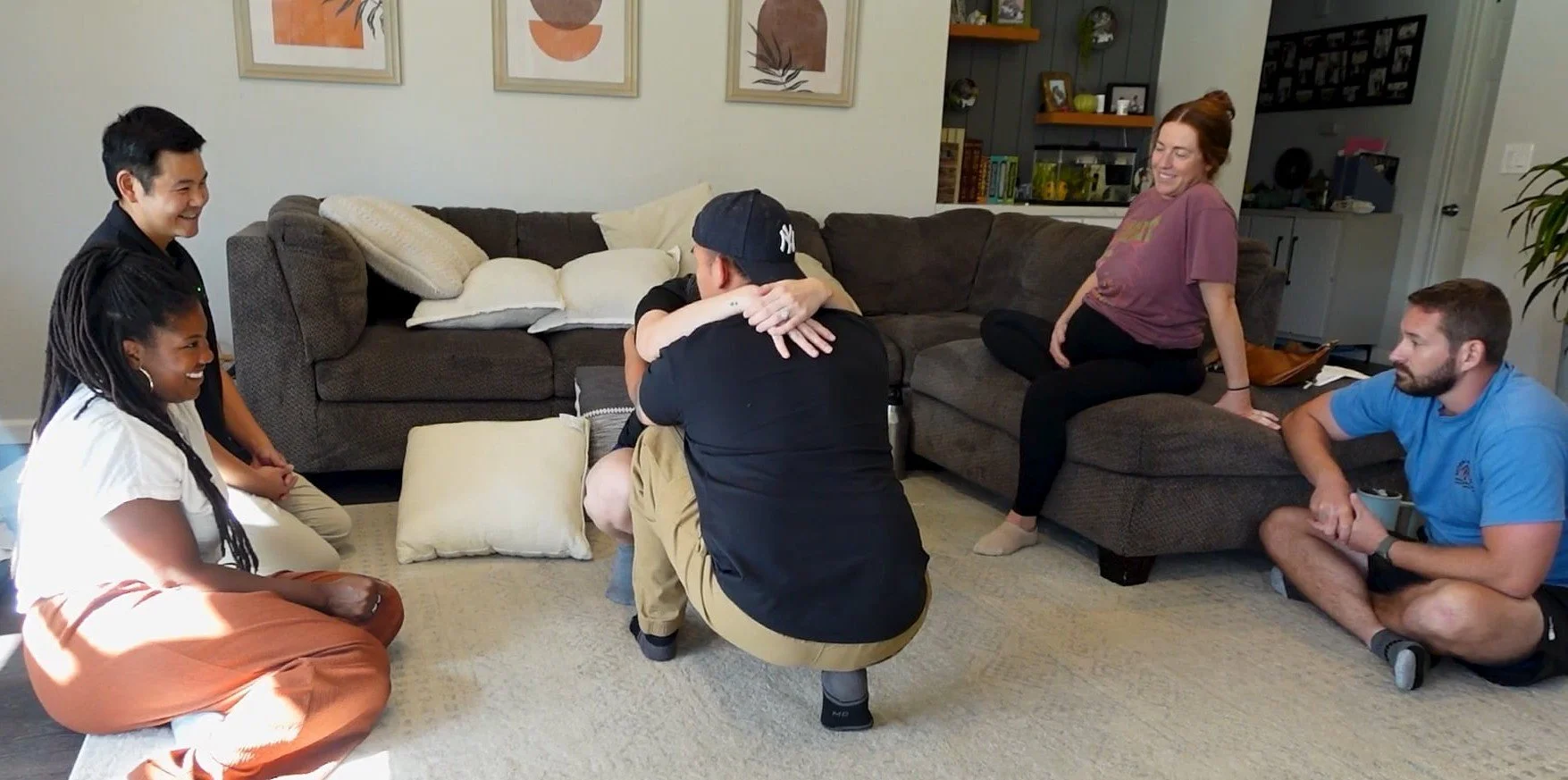
One of the couples pictured here shared something with Stephen and me after their birth that really stuck with us.
They told us that when they arrived at the hospital, they knew what to do—and that took away so much of the anxiety surrounding the experience.
It wasn't just because they knew when to go.
It was because we'd spent time practicing and rehearsing for labor together.
They'd worked through what to expect, practiced labor techniques, and prepared for the experience as a team.
So when the moment came, they weren't walking into something completely unfamiliar.
They felt confident because they'd already practiced.
And that's something Stephen and I emphasize at Our BirthRoom:
Birth preparation isn't just about knowing what might happen. It's about practicing what you'll actually do.
You can't rehearse every possible birth scenario or guarantee how labor will unfold.
But you can build familiarity, practice useful skills, and learn how to support each other before labor begins.
That's the kind of preparation a hospital tour alone can't provide.
If you're wondering where to start, our free class, 3 Things Every First-Time Parent Should Know Before Labor Begins, introduces the approach we teach couples.
You'll learn how to think about birth preparation as a team, rather than trying to figure everything out once labor begins.
Watch the free birth preparation class.
How to Prepare for Birth Beyond the Hospital Tour
If you've already taken your hospital tour, you're off to a good start.
Here are five practical next steps to build on that preparation.
1. Learn the Basics of Labor
Understand the stages of labor, what contractions do, and how labor may change over time.
You don't need to memorize every detail. Focus on recognizing what's happening and knowing when to reach out to your care team.
2. Practice a Few Labor Coping Techniques
Don't just read about breathing, positions, or counterpressure.
Try them together.
See what feels comfortable and what your partner can do to help.
3. Talk Through Common Birth Decisions
Discuss your preferences around movement, pain relief, monitoring, and common interventions.
You don't have to decide everything in advance.
But you can learn what questions to ask and what matters most to you.
4. Give Your Partner a Clear Role
Talk about what kind of support you want during labor.
Practice comfort techniques and discuss how your partner can help communicate with your care team.
The more specific you are, the easier it is for your partner to step in.
5. Prepare for Changes, Not Just Your Ideal Plan
It's okay to have preferences for your birth.
It's also important to know that labor doesn't always follow a predictable path.
Talk about how you'll approach unexpected recommendations, changing needs, and decisions that may come up along the way.
A flexible plan backed by real preparation is more useful than a perfect plan you don't know how to adapt.
A Hospital Tour Is Just the Beginning. Here's What to Learn Next.
Knowing where to go when labor starts is helpful.
But knowing what to expect, how to prepare, and how to navigate birth together? That's where real confidence begins.
If you're expecting your first baby, Stephen and I created a free class to help you take that next step.
3 Things Every First-Time Parent Should Know Before Labor Begins
Because you deserve to walk into birth with more than directions to the hospital. You deserve to feel informed, supported, and prepared.
A hospital tour shows you the space.
Preparation shows you how to move through it.
And that’s what makes the difference.
Continue Preparing for Your Birth
If this post was helpful, you might also enjoy:
• How to Work With Contractions (Instead of Fighting Them)
• Do Birth Plans Actually Matter? (And What Most People Get Wrong)
