

Why “Just Trust the Hospital” Isn’t a Birth Plan

One of the most common things I hear from parents planning a hospital birth is:
“I’m just going to be open and go with the flow.”
And listen—I get the heart behind that.
You want to stay flexible.
You trust your providers.
You don’t want to be “that patient” who shows up with a 10-page document.
But here’s the truth most families don’t realize:
Hospitals already have a birth plan.
It’s called protocol.
And if you don’t take time to think through your preferences,…
You’ll usually be guided straight into the standard routine.
That doesn’t mean the hospital is wrong.
It just means the system is designed for efficiency.
But your birth experience?
It deserves more intention than that.
What a Hospital Birth Plan Is Actually Competing With
In many hospitals, the standard approach includes:
Early admission once labor begins
Continuous fetal monitoring
Limited movement during labor
IV fluids as a routine precaution
Labor progressing within a specific timeline
Interventions if labor slows down
Sometimes those are medically necessary.
But many times?
They’re simply the default.

And unless you know what questions to ask…
It’s easy to move through the entire birth without realizing you had options.
A Birth Plan Isn’t About Controlling Birth
Let’s clear up a common myth.
A birth plan is not about scripting every moment of labor.
Birth is unpredictable.
But a birth plan helps you:
• Clarify your values
• Communicate with your care team
• Invite your partner into the process
• Understand your options ahead of time
In other words:
👉 A birth plan doesn’t control birth.
👉 It prepares you to participate in it.
And that makes a huge difference in how empowered you feel when decisions need to be made.
The Real Power Behind a Birth Plan
The paper itself isn’t the most important part.
The preparation behind it is.
Because when labor gets intense…
You’re not reading a document.
You’re relying on:
👉 what you understand
👉 how you respond
👉 how supported you feel
When couples prepare well, they understand:
• how labor actually works
• when interventions help—and when they’re optional
• how to advocate clearly
• how their partner can support them in real time
That’s what creates confidence.
What Nurses Actually Appreciate
One of the things our students hear most often after birth is:
“You two were so calm and prepared.”
Not because everything went perfectly.
But because they:
• understood the process
• communicated clearly
• knew their preferences
• stayed flexible when needed
Preparation isn’t about fighting your care team. It’s about staying connected to your preferences even when labor becomes intense.
It is collaborative.
And that changes the entire dynamic in a hospital setting.
Hospital Birth Can Be Beautiful
Hospital birth isn’t the problem.
Many families have incredible hospital births.
But the difference between:
👉 feeling swept along by the system
👉 and feeling confident inside it
It comes down to preparation.

When you understand your options, train your partner, and walk in with a plan that reflects your values…
You’re no longer just a patient.
You’re an active participant in your baby’s birth.
What Most Hospital Birth Plans Get Wrong
Most birth plans focus on a checklist:
• no epidural
• delayed cord clamping
• dim lights
• skin-to-skin
And yes—those preferences matter.
But a checklist alone won’t carry you through labor.
Because birth unfolds in real time.
Decisions happen quickly.
And the moments that matter most often aren’t written on the page.
The real power of a birth plan isn’t the document.
It’s the preparation behind it.
What Nurses Actually Look for in a Birth Plan
Here’s something many parents don’t realize:
Your birth plan is usually read first by your nurse—not your doctor.
And when they glance at it, they’re looking for three things:
1. Clarity
They want to quickly understand your priorities.
Simple, focused birth plans are far more likely to be respected.
2. Flexibility
A plan that acknowledges change builds trust immediately.
It signals you’re informed—not rigid.
3. Teamwork
When your partner is prepared and involved, it creates a calm, collaborative environment.
And that makes a huge difference.
Want a Hospital Birth Plan That Actually Works?
If you’re planning a hospital birth, you don’t need a longer birth plan.
You need a smarter one.
One that:
• reflects your values
• prepares you for real decisions
• helps your care team support you
• equips your partner to advocate alongside you
That’s exactly what I teach inside:
BirthPlan Makeover
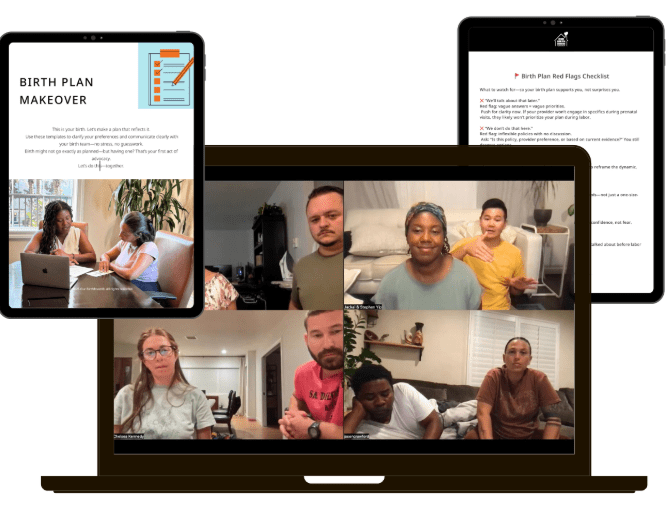
Inside, you’ll learn how to turn a basic template into a clear, confident communication tool that actually works in a hospital setting.
Because the goal isn’t to control birth.
It’s to walk into it prepared.
👉 Create your birth plan with BirthPlan Makeover
Hospitals have protocols.
But you still have preferences.
And when preparation meets the right support—
Hospital birth can be incredibly empowering.
Continue Preparing for Your Birth
If this post resonated with you, here’s where to go next:
• Do Birth Plans Actually Matter? (And What Most People Get Wrong)
• Your Doctor Isn’t a Birth Expert — Here’s Who Really Is
• Think You’re Not Natural Birth Material? Here’s Why That’s a Myth
