

What Causes C-Sections? (And How to Lower Your Risk Without Fear)

If you're hoping for a natural birth, there's probably one thought you've had at least once:
What if I end up needing a C-section?
Maybe everything has been low-risk.
Maybe you're doing all the things to prepare.
But you've heard enough birth stories that you still wonder:
What if labor starts normally…and somehow ends in surgery?
I don't want you walking into birth afraid of a C-section.
But I also don't want you assuming there's nothing you can do to influence how your labor is supported along the way.
Because both things can be true:
C-sections can be necessary and life-saving.
AND
There are ways to support physiologic birth and avoid unnecessary intervention when you and baby are doing well.
The goal isn't to control birth.
It's to understand how birth works, what can influence it, and when your body may simply need more support, movement, patience, or time.
First: Not Every C-Section Happens for the Same Reason
When people hear “C-section,” they often imagine one dramatic emergency.
And yes, those situations happen.
There are times when a C-section becomes the safest way to birth your baby.
But there are also C-sections that happen after hours of labor and a series of decisions along the way.

But there are also C-sections that happen after hours of labor and a series of decisions along the way.
That's why I don't want you thinking about C-sections as simply:
Preventable
or
Unpreventable.
Birth is more nuanced than that.
Instead, I want you asking:
Why is a C-section being recommended?
What is happening with me?
What is happening with my baby?
Is this urgent?
And if we're both doing well, is there room for more time or another option?
Those questions matter.
1. When Labor Slows Down
One of the most common reasons given for a first C-section is that labor isn't progressing.
You might hear:
“Your labor has stalled.”
“You're not dilating fast enough.”
“You're not making progress.”
And sometimes, labor truly does reach a point where it isn't progressing and intervention becomes necessary.
But here's what I want you to understand:
Slow does not automatically mean something is wrong.
Labor is not a machine.
It doesn't always move forward at the same speed.
It can speed up.
Slow down.
Change.
Pause.
And sometimes start moving again.
I know this personally.
During my first birth, my labor stopped progressing for almost 24 hours.
Yes.
Twenty-four hours.
My contractions slowed and eventually stopped.
But I was being cared for by a midwifery team.
They weren't looking only at the clock.
They were watching me.
They were watching my baby.
And because our individual circumstances allowed it, we gave my body time.
I rested.
I ate.
I drank.
I relaxed.
And eventually?
My contractions returned the next day.
My body wasn't broken.
It needed time.
Now, does that mean every woman whose labor slows should wait 24 hours?
Absolutely not.
My birth story is not a medical prescription.
There are situations where slow or arrested labor requires intervention.
But that experience taught me something I have carried into every birth I've had and every couple I've taught:
The clock is only one piece of the clinical picture.
How is mom doing?
How is baby doing?
Where are you in labor?
Is there a medical reason birth needs to happen sooner?
Are there reasonable things we can try?
And if everyone is doing well, is there room to give the body more time?
Those are very different questions from simply:
“How long has this been taking?”
Slow labor does not automatically mean failed labor.
Sometimes birth needs intervention.
And sometimes birth needs patience.
Part of that preparation is also learning what you can actually do while labor is unfolding—not just waiting for your body to perform. I teach that more deeply in How to Work With Contractions (Instead of Fighting Them).
Because when you understand what contractions are doing and have tools for responding to them, you can participate in labor instead of feeling like labor is simply happening to you.
2. Baby's Position Can Change How Labor Unfolds
Position matters too.
Some babies move through the pelvis easily.
Others need more time to rotate and descend.
Certain fetal positions can be associated with longer or more difficult labor.
And that's one reason movement during labor can be useful.
Depending on your situation, you may:
walk
sway
kneel
use hands and knees
use a birth ball
change sides
lean forward
rest in different positions
There is no magic position that guarantees a vaginal birth.
But when movement is safe for you, having the freedom to change positions gives you more options for comfort and mobility while labor unfolds.
Sometimes babies rotate.
Sometimes they don't.
Sometimes the situation changes enough that additional help becomes appropriate.
The goal isn't to force your body into the “perfect” position.
It's to give physiologic birth room to work when it's safe to do so.
3. The Birth Environment Matters
This is something we don't talk about enough.
Labor doesn't happen in a vacuum.
You're laboring in an environment.
There are lights.
Sounds.
People.
Questions.
Machines.
Interruptions.
Exams.
Maybe you're comfortable there.
Maybe you're not.
For someone planning a physiologic birth, creating an environment where she feels supported and able to cope can matter.
That may mean:
dimming the lights
keeping unnecessary interruptions down
moving freely when possible
using water
listening to music
having continuous support
protecting rest
keeping familiar comfort tools nearby
This isn't about creating the perfect Instagram birth room.
It's about recognizing that how you are supported during labor matters too.
And this is where your partner can become incredibly valuable.
Not as another medical professional.
As your prepared teammate.
4. Interventions Can Change the Course of Labor
This is where I want to be careful.
I don't believe:
Natural = always good.
or
Intervention = always bad.
That's too simple.
But I also don't believe we should pretend interventions have no effect on how birth unfolds.
An intervention may change what happens next.
It may change your mobility.
It may require additional monitoring.
It may change how contractions feel.
It may introduce another decision.
And sometimes?
That's completely appropriate.
Because there's a medical reason for it.
Other times, when mom and baby are doing well, there may be room to ask whether an intervention is necessary right now.
That's why our approach is:
Start conservatively when appropriate. Reassess when circumstances change. Use intervention intentionally.
Not because we're afraid of medicine.
Stephen and I are both medical professionals.
We know how valuable medicine can be when it's needed.
But we also know that normal physiology doesn't automatically need to be fixed.
5. Induction Doesn't Automatically Mean C-Section
Induction gets blamed for a lot.
And I don't want to oversimplify this either.
Induction can absolutely change the experience of labor.
Depending on the method and circumstances, it may involve medications, procedures, additional monitoring, or stronger contractions.
But induction does not automatically mean you'll have a C-section.
And not every induction is unnecessary.
Sometimes there is a medical reason that makes delivery safer than continuing the pregnancy.
The better question isn't:
“Is induction bad?”
It's:
“Why is induction being recommended for me?”
What is the medical reason?
What are the benefits?
What are the risks?
What are the alternatives?
What happens if we wait?
And if you and baby are doing well, do you have time to consider your options?
Those are the conversations I want couples prepared to have.
Because informed birth isn't automatically saying:
No.
It's understanding why before you decide.
If an induction has been offered to you—or you're wondering whether waiting for spontaneous labor or scheduling an induction makes more sense—read 39 Week Induction: Pros, Cons & What to Know Before You Decide next. I break down the decision in much more detail there.
6. Fetal Monitoring Can Affect Your Options Too
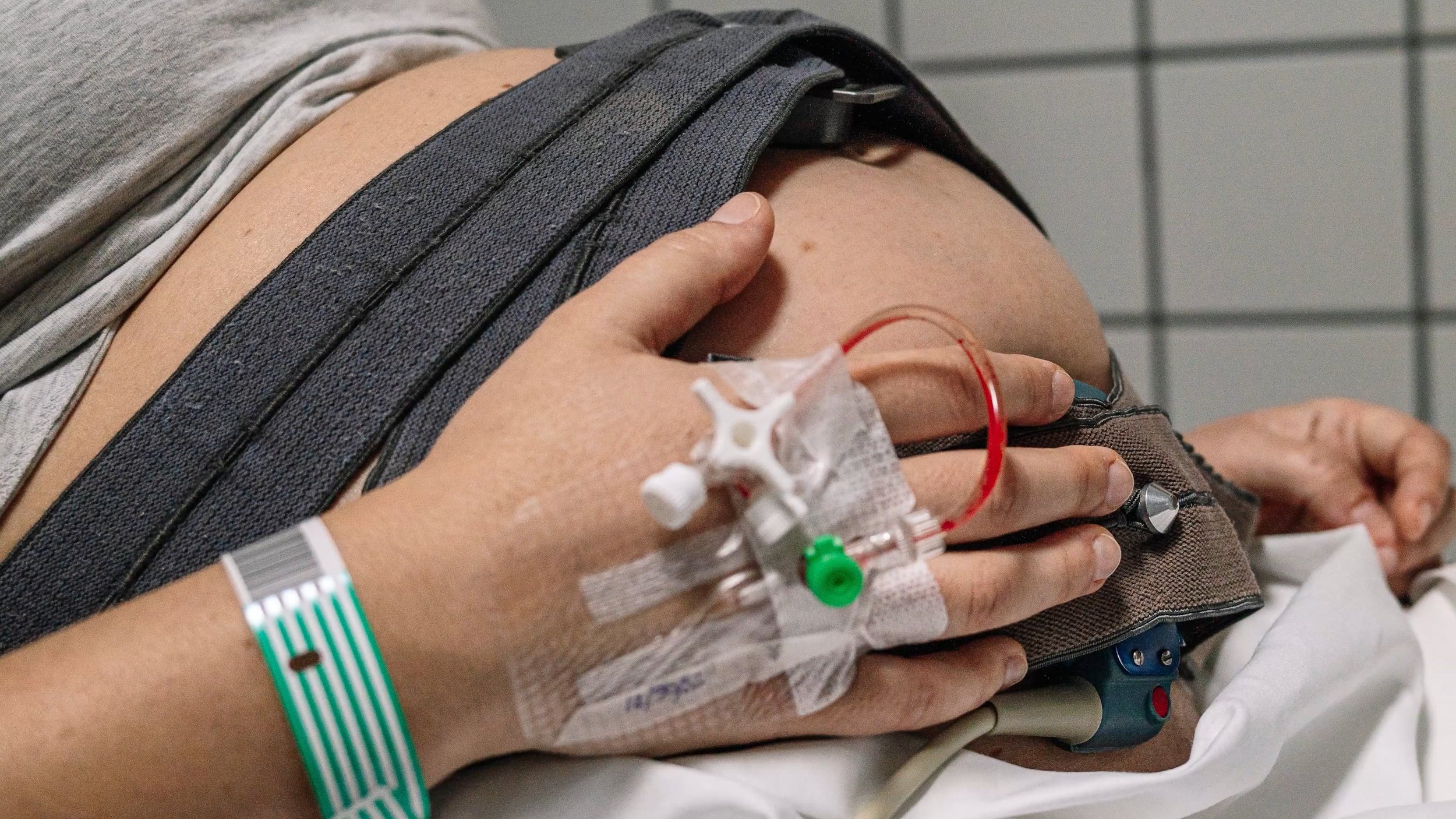
Fetal monitoring gives your care team information about how your baby may be tolerating labor.
And depending on your circumstances, continuous monitoring may be recommended.
But continuous electronic monitoring isn't the only way fetal wellbeing can be assessed in every labor.
For some low-risk labors, intermittent listening may be an option.
This was part of my own births.
I did not have continuous electronic monitoring.
My babies were still being assessed.
My midwives periodically listened to their heart rates while I was able to move, change positions, use water, rest, and follow what my body needed.
That's an important distinction:
Monitoring your baby's wellbeing and continuously electronically monitoring your baby are not automatically the same thing.
Your individual circumstances matter.
So does your birth setting.
And so does what is happening during labor.
That's why I want you asking:
“What kind of monitoring makes sense for my pregnancy and labor?”
Not:
“How do I avoid monitoring?”
7. Sometimes a C-Section Truly Is the Safest Choice
And then there are situations where the conversation changes.
Maybe something happens with the placenta.
Maybe baby's presentation makes vaginal birth unsafe.
Maybe there is serious concern about baby's wellbeing.
Maybe another complication develops.
There are situations where continuing to pursue a vaginal birth would create unnecessary risk.
This is where flexibility matters.
Protecting physiologic birth does not mean protecting it at all costs.
Natural birth isn't a prize you win by refusing enough interventions.
Our philosophy is much simpler:
Support normal physiology when it's appropriate.
Use medicine when it's needed.
Know enough to understand the difference.
That's the kind of birth confidence I want you to have.
So, Can You Lower Your Risk of a C-Section?
There is no checklist that can guarantee you a vaginal birth.
But there are ways you can prepare to support physiologic labor and make more informed decisions along the way.
Learn How Normal Labor Works
You shouldn't have to learn what contractions are doing while you're having them.
Learn beforehand.
Understand early labor.
Understand active labor.
Learn that birth doesn't always follow a perfectly predictable timeline.
Learn how to work with contractions instead of only bracing against them.
Because when you understand normal physiology, you're better prepared to recognize when something may simply need time—and when the situation has actually changed.
Choose Your Birth Team Carefully
This one is huge.
Before labor, ask your provider how they approach physiologic birth.
How do they define labor progress?
How do they approach induction?
Movement?
Eating and drinking?
Fetal monitoring?
Pushing positions?
What happens if labor slows down?
When do they begin talking about C-section?
You don't need a provider who promises you the exact birth you want.
Nobody can do that.
You want a provider whose philosophy of birth aligns with yours and who you trust to recognize when the clinical picture truly changes.
That's a very different thing.
Stay Home During Early Labor When It's Appropriate
For many low-risk pregnancies, early labor doesn't automatically mean it's time to rush to the hospital.
Depending on the plan you've made with your care team, staying in your familiar environment during uncomplicated early labor may give you more freedom to:
Eat.
Drink.
Rest.
Walk.
Shower.
Sleep.
Move.
And let labor establish itself.
Of course, there are reasons your provider may want you evaluated sooner.
That's why this is something to discuss before labor begins.
Move Your Body
When it's safe for your situation, use movement.
Walk.
Sway.
Change positions.
Use the birth ball.
Get into water if that's available to you.
Try hands and knees.
Rest when you need rest.
Movement is a tool—not a test.
You aren't trying to perform labor perfectly.
You're giving yourself options.
Prepare Your Partner
Your partner should not walk into labor with one job:
Hold your hand and hope for the best.
They can learn how to:
support positions
use counterpressure
help you cope with contractions
protect your environment
remind you to eat, drink, or rest when appropriate
understand your birth preferences
ask questions when something changes
help you stay grounded when you're tired
Your partner doesn't need to become a birth expert.
They need a role, tools, and practice.
That's how you become a prepared birth team.
And if your partner is willing but you're already wondering, Okay…but how do I actually get them ready for this? read How to Prepare Your Partner for Birth (So They Actually Know What to Do) next.
I walk you through the practical side of preparing your partner for contractions, comfort measures, communication, decision-making, and those moments when birth doesn't go exactly as expected.
Understand Common Interventions Before Labor
You don't need to memorize an obstetrics textbook.
But I do want you to understand the interventions you're most likely to hear about.
Induction.
Pitocin.
Continuous fetal monitoring.
Epidural.
Breaking your water.
Assisted vaginal birth.
C-section.
Learn the basics before labor.
Because contractions are not the ideal time to hear a completely unfamiliar recommendation and try to process it from scratch.
One Question Can Change the Conversation
When something is recommended during labor, one of the most powerful things you or your partner can ask is:
“Why?”
Not angrily.
Not defensively.
Curiously.
Why are you recommending this?
Then:
What are you concerned about?
How urgent is this?
Are mom and baby okay right now?
What are the benefits?
What are the risks?
Are there alternatives?
What happens if we give it more time?
Sometimes those questions may reveal that you have options.
Sometimes you'll learn there is a clear medical reason to move forward.
Either way, you understand more than you did five minutes ago.
You don't need a medical degree to advocate for yourself.
You need enough understanding to participate in the conversation.
What If I Prepare for All of This…and Still Need a C-Section?
Then preparation wasn't wasted.
This matters.
Because I don't ever want you thinking:
If I prepare enough, I can guarantee a natural birth.
Preparation doesn't control birth.
It helps you navigate it.
If circumstances change and a C-section truly becomes the safest option, the skills you built still matter.
You can still ask questions.
You can still understand what's happening.
Your partner can still support you.
You can still participate in decisions when time allows.
You can still be a team.
A change in the birth plan does not erase your preparation.
Sometimes Birth Needs Medicine. Sometimes Birth Needs Time.
That's the heart of this entire conversation.
I don't want you afraid of C-sections.
But I don't want you walking into birth believing you have no influence either.
Learn how birth works.
Choose your birth team carefully.
Protect physiology when you and baby are doing well.
Move when it's appropriate.
Prepare your partner.
Understand common interventions.
Ask questions.
And pay attention when the clinical picture changes.
Because sometimes birth needs medicine.
And sometimes birth needs time.
Preparation helps you understand the difference.
Want to Feel More Prepared Before Birth Decisions Get Real?
The middle of labor is not when I want you and your partner learning all of this for the first time.
That's why Stephen and I created:
The 3 Things Every First-Time Parent Should Know Before Labor Starts

Inside this free class, we'll show you why simply collecting birth information isn't enough, how to prepare as a team, and what you need to understand before labor starts so you're not trying to figure everything out in the moment.
Because birth is unpredictable.
Preparation doesn't have to be.
👉 Watch the Free Class: The 3 Things Every First-Time Parent Should Know Before Labor Starts
You don't need to control birth.
You don't need to fear every intervention.
And you don't need to blindly accept every intervention either.
You can understand.
You can ask questions.
You can prepare.
And you can walk into birth knowing you and your partner are ready to work together—whatever birth asks of you.
