

How to Prepare for Labor (So You Feel Calm, Confident, and Ready)

Preparing for labor doesn’t have to feel overwhelming.
But if we’re being honest…
Most couples don’t actually feel prepared.
They feel like they’re hoping everything goes well.
They pack the hospital bag.
Take the tour.
Maybe read a few articles.
And then?
They wait.
Hoping they’ll just “figure it out” when labor starts.
If that’s you, you’re not doing anything wrong.
You were just never shown how birth actually works in real time.
And that’s the part that changes everything.
Why So Many Couples Feel Unprepared
Most of what we hear about birth sounds like:
stories about pain
emergencies
things going wrong
But very little about:
how to work with labor
how to support each other
how to make decisions in the moment
So when labor begins—

It’s no surprise so many couples feel unsure instead of calm, confident, and supported.
And honestly?
That’s not your fault.
Why Most Labor Prep Falls Short
Most people are preparing based on ideas that don’t actually hold up in labor:
“Your body will just know what to do”
“Your doctor will make the best decisions for you”
“There’s nothing your partner can really do”
“Birth plans don’t really matter”
These might sound reassuring…
But in real life?
They often leave couples feeling unsure, reactive, and disconnected.
If you’re specifically hoping for a natural birth, you might also be wondering how to prepare in a way that supports that goal.
Because preparing for labor in general is one thing, but preparing for a natural birth requires a slightly different approach.
You’ll want to focus more on:
• working with your body during contractions
• reducing unnecessary interventions
• building confidence in the natural process
If that’s you, I break this down in more detail here: How to Prepare for a Natural Birth (Without Fear or Guessing)
What Labor Actually Feels Like (The Part No One Prepares You For)
Labor starts.
It’s early.
It’s unclear.
You’re not even sure if it’s “time” yet.
There’s no nurse.
No provider.
It’s just… you and your partner.
And in that moment, everything depends on:
Do you know what’s normal?
Do you know what to do next?
Does your partner know how to support you?
That’s the moment most couples aren’t prepared for.
Not because they didn’t try, but because no one ever showed them how.
This Is Where Everything Changes
Most couples don’t need more information.
They need a way to use it in real time.
That’s exactly why I created my free class:
10 Steps to a Calm and Confident Birth—Together
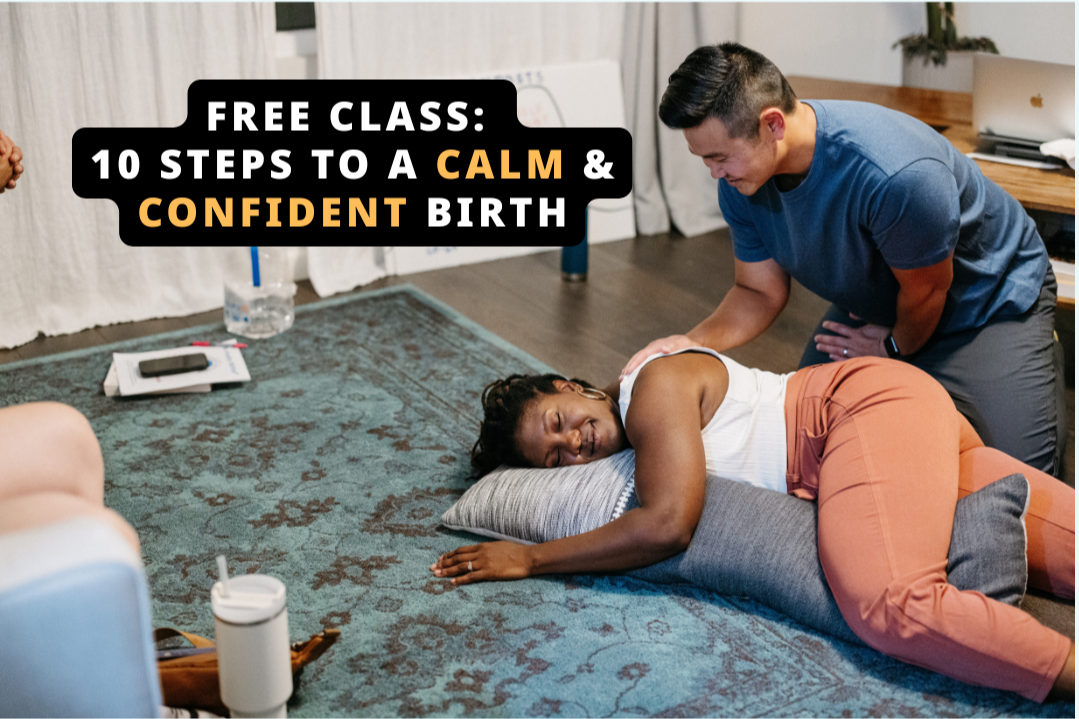
Inside, you’ll learn:
✨ A clear framework for birth preparation
✨ How to stay calm when labor gets intense
✨ How to work with your body instead of against it
✨ How to train your partner to support you in real time
The Birth Preparation Framework That Actually Works
Inside BirthRoom, we teach a different approach:
not just information
but a step-by-step system
Because preparing for labor isn’t just about learning about birth—
it’s about preparing for how you’ll move through it—together.
Phase 1: Build Your Birth Foundations
Before labor begins, preparation focuses on setting your body and environment up for success.
This includes:
• Supporting your body with intentional movement and nutrition
• Understanding your birth options
• Choosing providers who align with your goals
• Learning how to advocate for yourself
This is what turns “birth prep tips” into real preparation.
Phase 2: Prepare for Labor—Together
When labor begins, everything shifts.
And this is where most couples feel unsure—unless they’ve prepared for it.

Inside this phase, you learn:
• How labor actually unfolds
• What’s normal (so you don’t panic)
• How to make decisions in real time
• How your partner can provide real support
This is where your partner is trained to provide calm, steady, and confident support.
Step 1: Prepare Your Body for Labor (Now, Not Later)
Most people think labor prep starts when contractions begin.
But the truth is:
How you prepare during pregnancy impacts your labor experience
Intentional movement can:
• help baby positioning
• reduce discomfort
• support smoother labor
• improve endurance
Quick tip:
Spend time daily on a birth ball or sitting cross-legged to keep your hips open.
Step 2: Choose a Provider Who Supports Your Birth Goals
Your provider plays a bigger role than most people realize.
Ask yourself:
Do I feel heard?
Do I feel supported?
Do our approaches align?
Because feeling safe and supported isn’t optional—
It’s foundational.

Good question to ask:
“How do you support unmedicated birth?”
Want the Full 10-Step System?
Because here’s the truth:
Confidence doesn’t come from hoping things go well.
It comes from knowing what to do and having a partner who knows how to support you.
10 Steps to a Calm and Confident Birth—Together
Inside, you’ll learn:
✨ The full framework we use
✨ How to stay calm during labor
✨ How your partner supports you in real time
✨ What to do in uncertain moments
You don’t need to control birth.
But you do need to understand it.
Because when labor begins, you don’t want to guess.
You want to feel ready.
Continue Preparing for Your Birth
If this post helped you, here’s what to read next:
