

Why Preparing Together Changes Birth More Than Most People Realize
Birth isn't a solo experience.
But a lot of couples prepare for it like it is.
One person reads the books.
One person listens to the podcasts.
One person creates the birth plan.
One person saves the birth positions.
And the partner?
They love you.
They want to help.
But they often assume:
“I'll just figure out what she needs when labor starts.”
That's where the problem begins.
Because wanting to help and knowing how to help are not the same thing.
And labor is not always the easiest time for you to stop and explain:
“Okay, put your hands here, press harder, remind me to breathe, dim the lights, ask the nurse that question, and please stop asking me if I’m okay.” Lol.
Your partner doesn’t need to become a birth expert.
But they do need a role.
They need tools.
And they need to practice before labor starts.
That’s when support becomes more than good intentions.
Your Partner Has Something No One Else Has
Doctors bring medical expertise.
Nurses bring clinical experience.
Midwives bring knowledge of birth.
Doulas bring skilled labor support.
Those roles can be incredibly valuable.
But your partner brings something different:
They know you.
They know:
how you respond when you're overwhelmed
what helps you feel grounded
what kind of touch you like
what makes you laugh
what makes you shut down
when you need encouragement
when you need quiet
That matters.
And when your partner combines that knowledge of you with actual birth-support skills?
They stop being a bystander.
They become part of the team.
Love Is Not the Same as Preparation
This is one of the biggest misconceptions we see.
Couples assume:
“We’re close. He knows me. We’ll be fine.”
And maybe you will.
But closeness doesn’t automatically teach someone how to support a laboring person.
Your partner may love you deeply and still have no idea:
what normal labor can look like
how contractions change
what counterpressure is
when movement might help
what to say when you’re overwhelmed
what questions to ask if a decision comes up
how to stay calm when they’re nervous too
That doesn’t make them a bad partner.
It means birth support is a skill.
And skills can be learned.
What a Prepared Birth Partner Actually Does
A prepared partner isn't simply standing nearby saying:
“You’re doing great!”
Sometimes that helps.
Sometimes you may want to hear something very different.
A prepared partner learns how to respond to what is actually happening.
They Help You Cope With Contractions
Labor is physical work.
A prepared partner may help you:
try different positions
move when movement feels good
rest when you need to conserve energy
use a birth ball or other comfort tools
breathe through contractions
stay grounded when the intensity rises
The goal isn't to control labor.
It's to help you respond to it.
That is a very different skill.
If you want to go deeper into this, read How to Work With Contractions (Instead of Fighting Them)
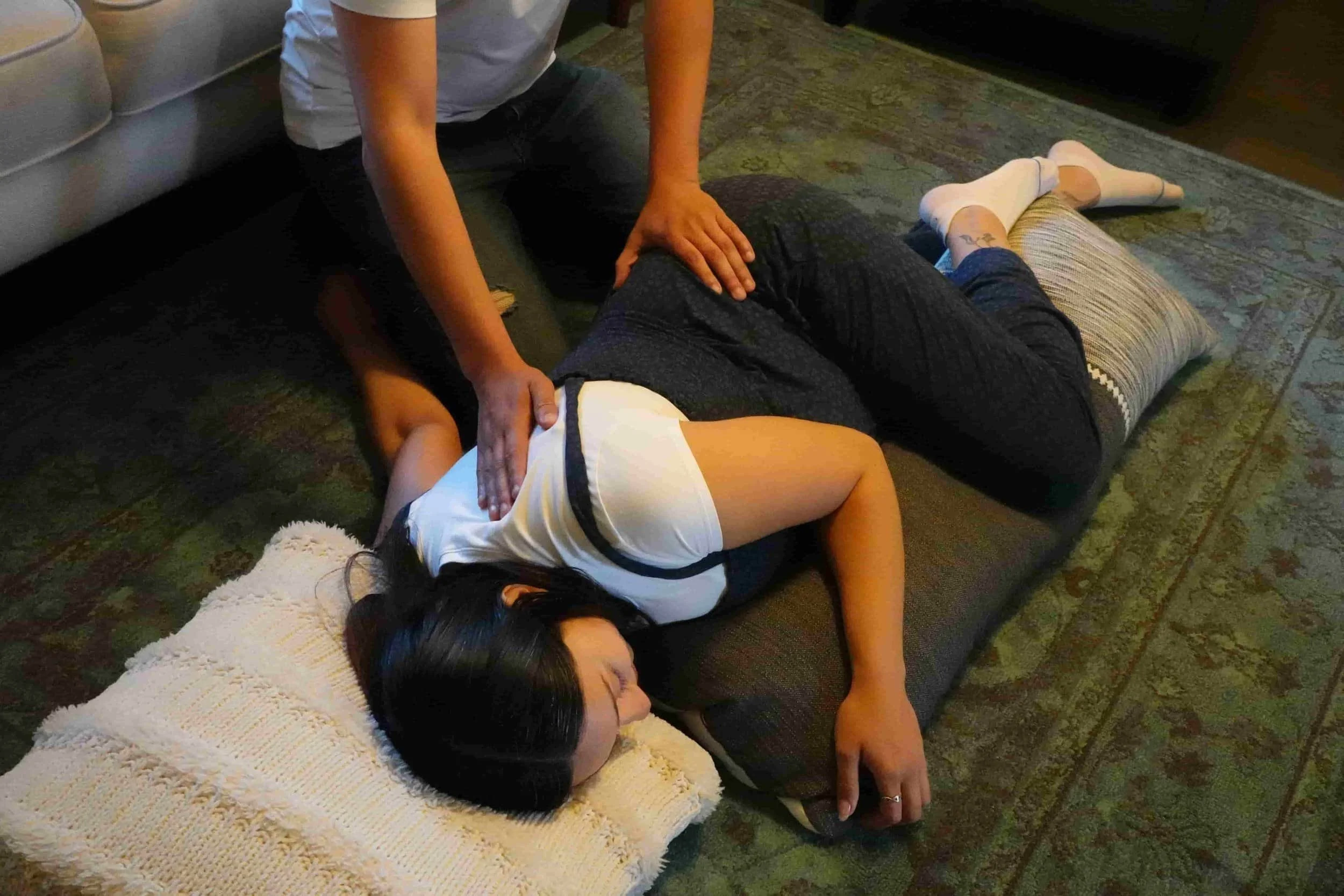
They Know How to Use Touch Intentionally
Touch during labor isn't one-size-fits-all.
Some people want massage.
Some want counterpressure.
Some want their partner’s hand on their shoulder.
Some want nobody touching them at all :)

A prepared partner learns different tools ahead of time so they aren't starting from zero.
That may include:
counterpressure
hip squeezes
massage
grounding touch
helping you change positions
But even more importantly?
They learn to pay attention.
Is this helping?
Do you want more pressure?
Do you want me close—or do you need space?
Prepared support isn't about performing a technique perfectly.
It's about responding to you.
They Help Protect Your Focus
Birth can get noisy.
Questions.
Lights.
Phones.
People walking in and out.
Different conversations happening around you.
A prepared partner can help protect your space.
That might mean:
dimming the lights
playing music
limiting unnecessary distractions
adjusting the room temperature
helping you get comfortable
reminding others when you need quiet
keeping your personal comfort items nearby
Not because the room has to look like a spa.
But because feeling supported and less distracted may make it easier for you to focus and cope.
They Handle the Little Things So You Don't Have To
This part is underrated.
Labor takes enough of your attention.
You don't also need to be thinking:
Where's my water?
Did we bring the charger?
Can someone get my lip balm?
When did I last eat?
Where is my birth plan?
A prepared partner can help manage the practical things around you.
That may include:
keeping drinks nearby
offering food when appropriate
grabbing comfort items
helping manage bags and logistics
keeping track of things you asked to remember
communicating with family when needed
Those tasks sound small.
During labor?
They can feel very big.
They Help With Communication Too
This is where partner preparation goes beyond comfort measures.
Sometimes labor includes decisions.
A provider recommends something.
The plan changes.
You hear a term you weren't expecting.
And suddenly you're trying to process information while also having contractions.
Your partner can help slow the moment down enough to ask:
“Can you explain what’s happening?”
“What are you concerned about?”
“What are our options?”
“Do we have time to talk about this?”
Their role isn't to argue with your care team.
And it isn't to make decisions for you.
It's to help you stay involved in the conversation.
That is support too.
What About a Doula, Nurse, or Midwife?
This is another important question.
If you have a doula, do you still need your partner prepared?
Yes.
Because their roles are different.
A doula may bring extensive labor-support experience.
A nurse may provide important clinical care.
A midwife or physician is responsible for medical care and safety.
Your partner is still your person.
And when everyone understands their role, you don't have to choose between professional support and partner support.
You can have both.
The goal isn't:
“My partner has to do everything.”
The goal is:
“My partner shouldn't feel useless because nobody taught them what to do.”
You Can Have More Than One Support Person
If your birth setting allows multiple support people, that's wonderful.
But clarity helps.

Your primary partner may stay focused on:
emotional support
comfort measures
communication
staying connected with you
Another support person may help with:
photos
food
siblings
errands
updates to family
practical logistics
That frees your primary partner to remain present with you.
What If My Partner Isn’t a “Birth Person”?
This is one of the biggest objections I hear.
Maybe your partner isn't listening to birth podcasts.
Maybe they don’t want to see graphic birth videos.
Maybe every time you bring up birth they say:
“Just tell me what I need to know.”
That does not mean they're doomed to be a terrible support person.
And they do not need to become obsessed with birth.
They need practical training.
What should I expect?
What can I do?
What should I say?
When should I step in?
When should I ask a question?
How do I support her without making things worse?
Those are learnable skills.
And for many partners, once birth stops feeling like one giant unknown, they become much more confident about participating.
This Is Why We Train Teams
Inside Our BirthRoom®, we don't treat the partner like an optional add-on.
We prepare couples together.
Because birth decisions shouldn't fall entirely on the laboring parent.
Comfort shouldn't depend on the laboring parent giving instructions every five minutes.
And your partner shouldn't have to stand beside you feeling helpless.
We teach partners how to become active, calm, useful support.
Not a replacement for your medical team.
Not a replacement for a doula.
Your teammate.
It's not about giving them a title.
It's about giving them a role.
A Personal Note
During each of our four births, Stephen didn't simply show up.
He prepared.
He learned what helped me.
We practiced together.
And when labor became intense, I didn't have to wonder whether I was carrying the whole experience alone.

His presence grounded me.
His support helped me stay focused.
And we moved through birth as a team.
That experience shaped so much of how we teach now.
Because I don't want the pregnant parent to become the only person in the relationship preparing for birth.
Both of you are becoming parents.
Both of you can prepare.
Preparing Together Changes the Experience
A prepared partner does not guarantee an easy labor.
They don't guarantee an unmedicated birth.
And they can't control every decision or outcome.
But preparation can change how the two of you show up.
Instead of:
“What do you need me to do?”
there is:
“We practiced this. Let’s try it.”
Instead of:
“I don't know what's happening.”
there is:
“Let's ask.”
Instead of one parent carrying the entire mental load:
You have a teammate.
That is the kind of support we want couples to experience.
Before Labor Starts, There Are 3 Things I Want You Both to Know
Most couples spend months preparing for the baby.
Very few are taught how to prepare for birth together.
That's why Stephen and I created our free class:
The 3 Things Every First-Time Parent Should Know Before Labor Starts
Inside, you'll discover why information alone isn't enough to prepare for birth, how to prepare even when things don't go according to plan, and how your partner can become one of your greatest sources of support during labor.
Because your partner doesn't need to be a birth expert.
They need to know how to support you.
And the best time to learn that is before contractions begin.
Birth isn't a solo experience.
And you shouldn't have to prepare for it like one.
Keep Preparing for Birth
If this post was helpful, you might also enjoy:
• How to Prepare Your Partner for Birth (So They Actually Know What to Do)
• How to Work With Contractions (Instead of Fighting Them)
• How to Prepare for a Natural Birth (Without Fear or Guessing)
