

How to Prepare Your Partner for Birth (So They Actually Know What to Do)
Your partner loves you.
They're excited about the baby.
They'll build the crib.
Install the car seat.
Rub your back when pregnancy gets uncomfortable.
But when you start talking about contractions, birth positions, or what happens during labor?
You get:
“Just tell me what you need when the time comes.”
And suddenly you're thinking:
Wait.
I'm going to be the one in labor.
Am I also supposed to manage you?
Friend, no. 😄
Your partner does not need to become obsessed with birth.
They don't need to read every pregnancy book on your nightstand.
And they definitely don't need a medical degree.
But they do need preparation.
Because there is a huge difference between a partner who wants to help…
and a partner who knows how to help.
Being There Isn’t the Same as Being Prepared
Most partners plan to be supportive during labor.
Of course they do.
The problem is that “I'll support you” isn't really a plan.
What happens when you're in the middle of a contraction and don't want to talk?
What happens when your back hurts and you need counterpressure?
What happens when you're exhausted and starting to doubt yourself?
What happens when someone recommends something you weren't expecting?
What happens when your partner gets nervous too?
That's when preparation shows up.
A prepared partner isn't standing beside you asking:
“What do you want me to do?”
every five minutes.
They have tools.
They understand what may be happening.
They know what you've practiced.
They know your preferences.
And they know how to help you take the next step.
Love gets them into the birth room.
Preparation gives them a role once they're there.
So…What Does a Prepared Birth Partner Actually Know?
They don't need to know everything about birth.
That's not the goal.
They need to know enough to be useful when it matters.
A prepared birth partner understands:
what labor may look like
how to help you cope with contractions
comfort measures you've practiced together
ways to help with movement and position changes
how to protect your focus
how you prefer to be encouraged
what your birth preferences are
how to ask questions if the plan changes
That's very different from memorizing a childbirth textbook.
You don't need another medical professional in the room.
You need a teammate.
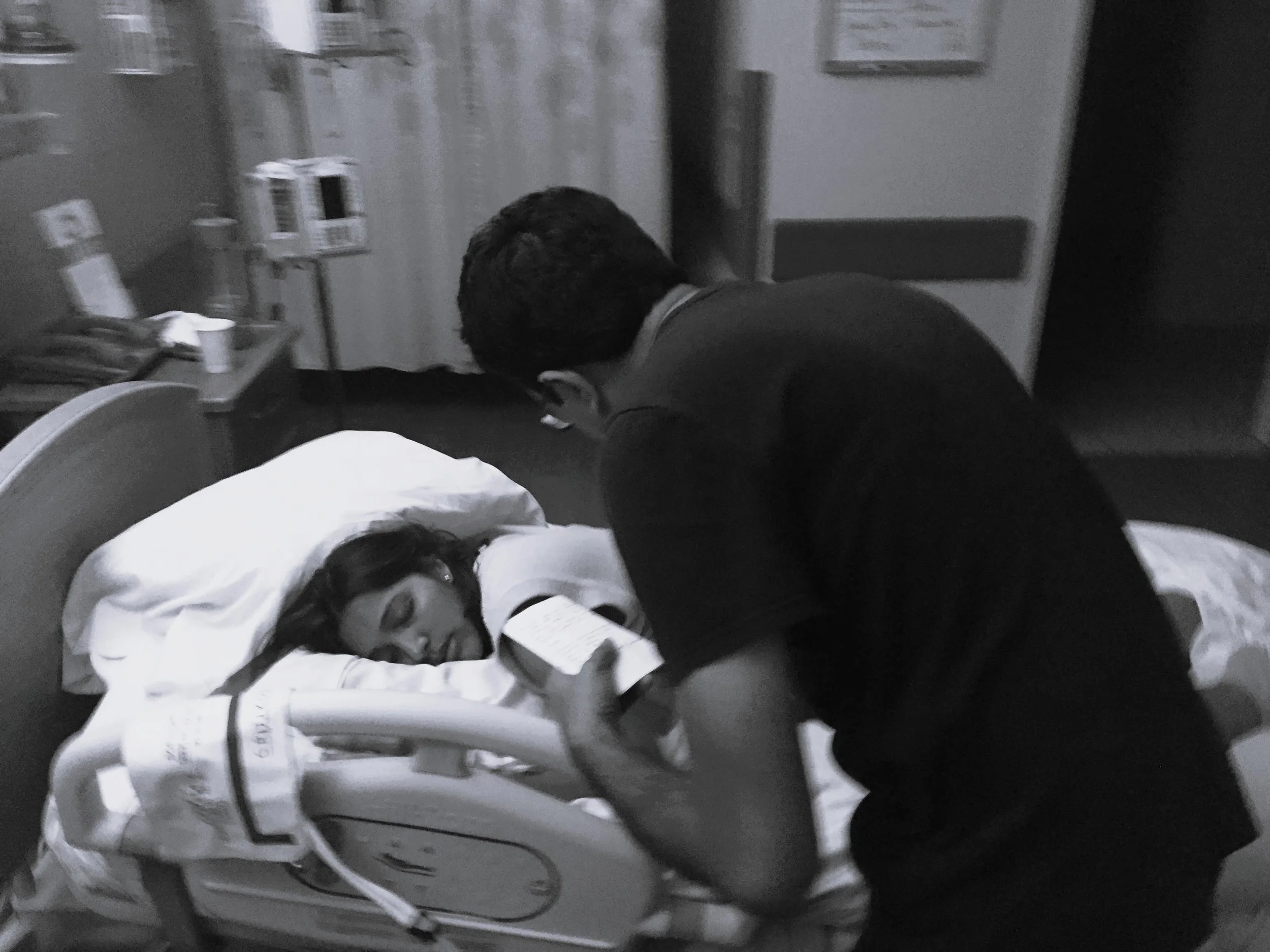
Step 1: Teach Them What Labor May Actually Look Like
One of the best ways to prepare your partner is to make labor less mysterious.
If the only birth they've ever seen was on TV, their mental picture may be:
Water breaks.
Everybody panics.
Race to the hospital.
Screaming.
Baby arrives seven minutes later.
Real labor may look very different.
Your partner should have a basic understanding of:
early labor
contractions
how labor may change over time
when you may need to contact your provider
what kinds of changes may require your attention
Why does that matter?
Because when something is unfamiliar, it can feel alarming.
But when you've already talked about it, your partner has context.
Instead of:
“WHAT IS HAPPENING?!”
you can have:
“Okay. We talked about this. What's our next step?”
That's preparation.
Step 2: Practice Comfort Measures Before You Need Them
Please don't wait until you're having strong contractions to discover that your partner has absolutely no idea where to put their hands. 😄
Practice beforehand.
Let them learn how to:
apply counterpressure
massage your back
support different positions
use a birth ball with you
help you move
offer grounding touch
remind you to release unnecessary tension
And here's the important part:
Practice communication too.
“Higher.”
“Lower.”
“More pressure.”
“Don't touch me.”
“Yes. THAT. Keep doing exactly that.”
Those are useful birth skills.
Your partner doesn't need perfect technique.
They need familiarity.
Because familiar tools are much easier to reach for when labor becomes intense.
Step 3: Tell Them How You Want to Be Encouraged
This one gets overlooked.
Not everybody wants the same kind of encouragement during labor.
One person loves:
“You're so strong! You've got this!”
Another person hears that during a contraction and wants everyone in the room to stop talking immediately. 😄
Talk about this before birth.
What helps you when you're stressed?
Do you like reassurance?
Quiet?
Eye contact?
Prayer?
Physical touch?
Simple instructions?
Humor?
Your partner already knows you better than most people in the birth room.
Preparation helps them use that advantage intentionally.
Step 4: Give Them a Job Between Contractions Too
Birth support isn't only about what happens during contractions.
Your partner can help carry the practical load around you.
Depending on your birth setting and circumstances, that may mean:
offering water
helping you rest
getting comfort items
changing the music
dimming lights
keeping track of your things
helping communicate with family
keeping unnecessary distractions down
reminding you of tools you've practiced
These are small jobs.
But when you're focused on labor, they can feel huge.
You should not have to manage the entire room while also giving birth.
Step 5: Prepare Them for Decisions—not Just Contractions
This may be one of the most important parts of partner preparation.
Because birth support isn't only:
Massage.
Breathing.
Counterpressure.
Sometimes birth includes decisions.
Maybe your provider recommends an intervention.
Maybe something changes.
Maybe you're exhausted.
Maybe you hear a term you weren't expecting.
And you're trying to process all of that while having contractions.
Your partner can help you slow the moment down.
They can ask:
“Can you explain what's happening?”
“What are you concerned about?”
“What are our options?”
“Do we have time to talk about this?”
Their job isn't to fight your care team.
Their job isn't to make medical decisions for you.
And it certainly isn't to pretend they know more than your provider.
Their job is to help you stay part of the conversation.
That's advocacy too.
And you don't need a medical degree to do it.
Step 6: Practice Staying Calm When the Plan Changes
This is the part of partner preparation I think couples need more of.
We spend a lot of time preparing partners for:
“Here's what to do during the birth we're hoping for.”
But what about:
“Here's how we'll respond if something changes.”
Maybe labor lasts longer than expected.
Maybe you decide you want an epidural.
Maybe induction becomes part of the conversation.
Maybe additional monitoring is recommended.
Maybe your birth needs to move in an entirely different direction.
A prepared partner isn't someone who prevents the plan from changing.
They're someone who stays with you when it does.
They help you understand.
Ask questions.
Take the next decision one step at a time.
And remind you:
We're still a team.
That matters.
What If My Partner Isn’t Interested in Birth Stuff?
This is one of the most common concerns we hear.
Maybe you've sent them articles.
Saved videos.
Mentioned the birth class.
And they're still not exactly enthusiastic.
That doesn't necessarily mean they don't care.
Sometimes partners don't engage because they don't know where they fit.
Pregnancy is happening inside your body.
Appointments focus heavily on you and the baby.
Birth education can feel like a giant amount of information they aren't sure they'll actually use.
So make their role concrete.
Don't just say:
“I need you to learn about birth.”
Help them understand:
“I need you to learn how to support me.”
That's different.
Now there's a purpose.
A role.
A reason this matters to them too.
Your Partner Does Not Need to Become a Doula
This is important.
A prepared partner is not a replacement for a doula.
And they aren't a replacement for your nurse, midwife, or physician.
Those people have their own expertise and responsibilities.

Your partner's role is different.
They are your person.
They know you.
They know what matters to you.
They know the conversations you've already had.
And unlike many members of your care team, they're there specifically for you.
Professional support and prepared partner support don't have to compete.
They can work beautifully together.
The goal isn't to turn your partner into another professional.
It's to turn them into a prepared teammate.
What This Looked Like in Our Births
Stephen didn't walk into our first birth magically knowing how to support me.
We prepared.
And through our four births, that preparation became part of how we moved through labor together.
He wasn't standing on the sidelines.
He had a role.
He knew how to support me physically.
He knew what helped ground me.
He understood what we were hoping for.
And when birth became intense, I wasn't also carrying the mental load of teaching him what to do.
That experience shaped the way we teach couples today.
Because I've experienced the difference between simply having someone you love in the room…
and having someone you love who is prepared to support you.
This Is Why We Prepare Couples Together
This is one of the things that makes Our BirthRoom Academy different.
We don't teach the pregnant parent everything and then say:
“Make sure you explain this to your partner.”
Nope.
You're already growing the baby.
We're not giving you another job. 😄
We teach you together.
Stephen and I show couples what birth support actually looks like.
We help you understand labor.
Practice comfort measures.
Prepare for decisions.
Talk through real-life scenarios.
And give your partner a clear role.
We're not trying to turn either of you into a birth expert.
We're helping you become a prepared birth team.
Because when labor begins, we don't want your partner thinking:
“What am I supposed to do?”
We want both of you thinking:
“We prepared for this. What's our next step?”
Your Partner Doesn’t Need More Information. They Need Training.
This is the difference.
Knowing that counterpressure exists?
Information.
Practicing where and how to apply it?
Preparation.
Knowing birth positions exist?
Information.
Practicing how your partner can help you move between them?
Preparation.
Knowing informed consent matters?
Information.
Practicing the questions you can ask when something unexpected is recommended?
Preparation.
Your partner doesn't need 300 pages of birth theory.
They need to understand their role and practice the skills they'll actually use.
That's how good intentions become useful support.

Before Labor Starts, There Are 3 Things I Want You Both to Know
If you're already wondering:
Will my partner actually know how to help me?
Don't wait until labor to find out.
Stephen and I created a free class for first-time parents:
The 3 Things Every First-Time Parent Should Know Before Labor Starts

Inside, you'll discover why information alone isn't enough, how to prepare even when birth doesn't go exactly according to plan, and how your partner can become one of your greatest sources of support during labor.
Your partner doesn't need all the answers.
They don't need a medical degree.
And they don't need to become obsessed with birth.
They need a role.
They need tools.
They need practice.
And the best time to give them those things is before labor begins.
Because birth isn't something you should have to manage alone.
It's something you can prepare to move through together.
Continue Preparing for Your Birth
If this post helped you see what your partner is truly capable of, here’s how to keep building your birth team:
• How to Work With Contractions (Instead of Fighting Them)
• How to Prepare Your Partner for Birth (So They Actually Know What to Do)
• Why Preparing Together Changes Birth More Than Most People Realize
